 Legal experts said a lack of forensic evidence related to the decade-old allegation is one hurdle toward a conviction.
Thursday, December 31, 2015
Experts Foresee Obstacles for Both Sides in Bill Cosby Case
Legal experts said a lack of forensic evidence related to the decade-old allegation is one hurdle toward a conviction.

Tuesday, December 29, 2015
Friends No More as Trump Takes On Clintons
 Donald J. Trump once defended Bill Clinton against allegations of scandal and sexism. But in the past week, any semblance of friendship ended.
Monday, December 28, 2015
Bush mocks Trump, challenges him to one-on-one debate

Jeb Bush emphasized terrorism and the economy during a speech to home-state civic leaders and supporters Monday, but he couldn’t escape the long shadow of Donald Trump.
Sunday, December 27, 2015
In N.H. primary, undeclared voters could be a key wild card
 LONDONDERRY, N.H. _ Catherine Johnson's day started at 6 a.m. She left her home in Hanover, drove 100 miles southeast across New Hampshire to a campaign event in Plaistow, then worked her way back with stops in Londonderry,...
Saturday, December 26, 2015
6 Reasons Why Bigger Is Not Better In Your Startup
Many passionate entrepreneurs fight to add more features into their new products and services, assuming that more function will make the solution more appealing to more customers. In reality, more features will more likely make the product confusing and less usable to all. Focus is the art of limiting your scope to the key function that really matters for the majority of customers.
YouTube did it with videos, Instagram did it with photos, and Amazon did it with books. Many of the business plans I have seen as an investor, like trying to integrate all the social media features of Facebook, Twitter, and LinkedIn into a new platform, don't do it. Of course, once you have a brand and more resources, it can pay to expand your book selling to a full e-commerce site.
In fact, there are a host of reasons why a non-focused startup business is more likely to struggle for survival, lose market and investor attention, and miss out on the opportunity to capitalize on their scope:
- Time to market is tied to the size of your offering. In many business domains today, the market seems to change about every ninety days. With the current low cost of entry, nimble competitors appear quickly and seize the high ground of your existing customers and potential. No startup can implement a broad strategy quickly enough to stay ahead.
- Broad product offerings require too much infrastructure. More money is hard to find, and building efficient multiple processes is even harder. Every aspect of every product requires development, testing, manufacturing, marketing, and distribution. The probability of failure goes up exponentially as the number of product features increase.
- It's tough for an elephant to be agile. Every successful startup I know has pivoted a couple of times, as they learn what really works in the marketplace and in the sales process. Did you know that both YouTube and Facebook started out to be dating sites? Even IBM, with their personal computer, had trouble making their elephant dance.
- Ongoing market leadership requires continuous innovation. The initial larger cost in time and dollars is only the beginning. The first-to-market advantage doesn't last long. You need continuous innovation in all elements of your product line to stay ahead, or your startup will be quickly left in the dust.
- Marketing a product with too many features is self-defeating. It's almost impossible to craft a memorable message that has more than three bullets. The more you try to capitalize on the breadth and depth of your solution, the more people don't get the message at all, and settle for a competitor that focuses on their personal hot-button.
- Your personal bandwidth is quickly exceeded. When your solution has too many elements, even you can't keep the priorities straight, and your team gets frustrated, tired, loses motivation, and tends to not do anything well. As a new entrepreneur in a new startup, it's better to walk before you try to run.
At the same time, focusing on the wrong things is equally destructive and unproductive. In some environments product focus is not the most important element. Perhaps the focus should be on a single distribution channel, better customer service, or a simplified pricing structure. In all cases, hiring the best people is likely more important than adding a few features to your solution.
Thus the first and top focus for every entrepreneur should be on strategy. The strategy needs to be simple, written down, and communicated regularly to the entire team. A simple test is to see if you can quickly name your top three priorities, and if every team member is able to respond quickly with the same three. Too many strategy elements generate lots of work, but few results.
The final focus should be on emphasizing strengths and measuring success, rather than on solving the crisis of the moment and eliminating weaknesses. Only by focusing on the right elements of market, product, business, and people, can you really hope to win. Bigger is not necessarily better. Be the best in your chosen niche and you can change the world.
-- This feed and its contents are the property of The Huffington Post, and use is subject to our terms. It may be used for personal consumption, but may not be distributed on a website.


The Biggest And Best LGBT Stories Of 2015
2015 was a big year for the lesbian, gay, bisexual and transgender (LGBT) community. HuffPost and a group of panelists discuss the top stories of the year.
-- This feed and its contents are the property of The Huffington Post, and use is subject to our terms. It may be used for personal consumption, but may not be distributed on a website.


Central US braces for blizzard, tornadoes
 The central U.S. braced for a storm system forecast to bring everything from blizzard conditions to the threat of tornadoes Saturday as the South tried to recover from severe weather that hammered the region for days.
Thursday, December 24, 2015
Protesters in Chicago stage ‘Black Christmas’ against police violence

More than a hundred people marched along North Michigan Avenue on Thursday, holding “die-ins” in the street and blocking last-minute shoppers from stores as they staged a “Black Christmas” in response to the Laquan McDonald shooting.
Wednesday, December 23, 2015
Airlines prep for holiday crush: More flights, bigger planes
 Airlines are shifting the timing of thousands of flights, even adding dozens of redeyes, as they try to avoid delays while hauling millions of passengers from now through the Christmas weekend.
Monday, December 21, 2015
Hundreds of tips in search for 'affluenza' teen

Authorities say they've received hundreds of leads in their search for a Texas teen who disappeared after video surfaced showing he may have violated his probation from a deadly drunken car crash.
Saturday, December 19, 2015


Inside The Billion-Dollar Battle For Puerto Rico’s Future
The money poured in by the millions, then by the hundreds of millions, and finally by the billions. Over weak coffee in a conference room in Midtown Manhattan last year, a half-dozen Puerto Rican officials exhaled: Their cash-starved island had persuaded some of the country’s biggest hedge funds to lend them more than $3 billion to keep the government afloat.
-- This feed and its contents are the property of The Huffington Post, and use is subject to our terms. It may be used for personal consumption, but may not be distributed on a website.


Media Has Symbiotic Ties with ISIS? Ignoring Other Terrorist Groups
Some terrorist groups attract a significant amount of media attention while others receive little or no coverage.
For example, the predominant Western media outlets devote much of their news and analysis to ISIS, an extremist Sunni group, while failing to raise public awareness about other terrorist groups.
There seems to be a symbiotic relationship between the mainstream media and ISIS. On one hand, ISIS receives the publicity it needs from CNN, Foxnews, etc. On the other hand, these networks increase their ratings, viewers, readers, and advertisement revenues.
There are major questions to address. Why do some terrorist groups win a large share of media attention while others do not? What are other major terrorist groups?
There are more than 250 terrorist groups around the world, with different religious and socio-political backgrounds. Roughly %25 of these groups are funded, trained or supported by the Iranian government. Other groups such as Kataib al-Imam Ali (KIA) use horrific tactics similar to ISIS. In fact, the group is known for showing videos of beheadings and burning bodies. It is backed by Iran, and originated from the Muqtada al-Sadr's Mahdi Army. Shebl al-Zaidi is the secretary-general of Kataib al-Imam Ali. He is known for his sectarian and cruel tactics.
Another militia group, known for its violent attacks is Asa'ib Ahl al-Haq. It reportedly receives approximately $2 million a month from the Islamic Republic.
First of all, media outlets, and journalists, seem to prefer simplicity to complexity. It's much easier to talk about the horrific acts of the Islamic State than to do research on other stealth terrorist and radical militia groups. Unfortunately, a lot of reporters are not knowledgeable about the dangers these groups pose.
For example, discussing Kataib al-Imam Ali or Asa'ib Ahl al-Haq requires an understanding of the political set-up in Iraq, Iran, and Lebanon as well as the interconnectedness between Iran's Revolutionary Guard Corps and other political groups.
With the high pace and immediate demand reporters face it's easier to write about ISIS than to research all other groups.
Considered words of wisdom from an Iranian diplomat who told me: we prefer to drive at night with the light off. In other words, it is preferable to fly under the radar. It follows that while ISIS works hard to gain media attention- and is adept at utilizing social media- such as Twitter, Facebook, Youtube, etc- other militia groups are less likely to seek media attention.
For example, the modus of Operandi of Iran-backed groups is based on some of the tactics of the General Qasem Soleimani, commander of Iran's Islamic Revolutionary Guard Corps-Qods Force: conduct stealth attacks while denying responsibility.
The ultimate goal of these groups is to enter the political establishment of the state and inform decision-making from the top. Hezbollah succeeded at this in Lebanon and other Iraqi Shiite militia groups did the same on Iraq.
In addition, some media outlets view these radical militia groups as "legitimate" groups because they are funded by a nation-state or they are fighting ISIS. Many of these groups report directly to General Soleimani or Iran's Supreme Leader, Ayatollah Ali Khamenei. As a result, if a similar violent act is committed by one of these groups, the mainstream media outlets are less likely to criticize them as harshly.
Furthermore, large Media outlets are driven by a need to make a profit in order to survive as organizations. They write about topics that people are focused on, in order to attract a high number of readers and in turn advertisers.
Moreover, the nature of the crimes committed by ISIS attract interest by global media because it seems they target people outside the Middle East. For example, ISIS appears to be a threat to Americans and Europeans. People read about what they believe is a potential threat. Many Americans and Europeans feel that if an organization can carry out attacks in Paris, London, or cause mass shootings (like in San Bernandino), then they can commit these terrorist attacks anywhere.
In closing, despite the fact that there are many terrorist groups around the world committing atrocities against civilians, only a select few receive attention from the media. It is incumbent on the media outlets, reporters and journalists to make more of an effort to highlight these lesser known terrorist groups as well as to shed light on the sufferings of the forgotten people who are affected by other terrorist groups.

Dr. Majid Rafizadeh, an American scholar and political scientist, is the president of the International American Council on the Middle East. Harvard-educated, Rafizadeh serves on the advisory board of Harvard International Review. He is originally from Iran and Syria. You can contact him at Dr.rafizadeh@post.harvard.edu or follow him at @majidrafizadeh
This post first appeared on Al Arabiya.
For example, the predominant Western media outlets devote much of their news and analysis to ISIS, an extremist Sunni group, while failing to raise public awareness about other terrorist groups.
There seems to be a symbiotic relationship between the mainstream media and ISIS. On one hand, ISIS receives the publicity it needs from CNN, Foxnews, etc. On the other hand, these networks increase their ratings, viewers, readers, and advertisement revenues.
There are major questions to address. Why do some terrorist groups win a large share of media attention while others do not? What are other major terrorist groups?
There are more than 250 terrorist groups around the world, with different religious and socio-political backgrounds. Roughly %25 of these groups are funded, trained or supported by the Iranian government. Other groups such as Kataib al-Imam Ali (KIA) use horrific tactics similar to ISIS. In fact, the group is known for showing videos of beheadings and burning bodies. It is backed by Iran, and originated from the Muqtada al-Sadr's Mahdi Army. Shebl al-Zaidi is the secretary-general of Kataib al-Imam Ali. He is known for his sectarian and cruel tactics.
Another militia group, known for its violent attacks is Asa'ib Ahl al-Haq. It reportedly receives approximately $2 million a month from the Islamic Republic.
First of all, media outlets, and journalists, seem to prefer simplicity to complexity. It's much easier to talk about the horrific acts of the Islamic State than to do research on other stealth terrorist and radical militia groups. Unfortunately, a lot of reporters are not knowledgeable about the dangers these groups pose.
For example, discussing Kataib al-Imam Ali or Asa'ib Ahl al-Haq requires an understanding of the political set-up in Iraq, Iran, and Lebanon as well as the interconnectedness between Iran's Revolutionary Guard Corps and other political groups.
With the high pace and immediate demand reporters face it's easier to write about ISIS than to research all other groups.
Considered words of wisdom from an Iranian diplomat who told me: we prefer to drive at night with the light off. In other words, it is preferable to fly under the radar. It follows that while ISIS works hard to gain media attention- and is adept at utilizing social media- such as Twitter, Facebook, Youtube, etc- other militia groups are less likely to seek media attention.
For example, the modus of Operandi of Iran-backed groups is based on some of the tactics of the General Qasem Soleimani, commander of Iran's Islamic Revolutionary Guard Corps-Qods Force: conduct stealth attacks while denying responsibility.
The ultimate goal of these groups is to enter the political establishment of the state and inform decision-making from the top. Hezbollah succeeded at this in Lebanon and other Iraqi Shiite militia groups did the same on Iraq.
In addition, some media outlets view these radical militia groups as "legitimate" groups because they are funded by a nation-state or they are fighting ISIS. Many of these groups report directly to General Soleimani or Iran's Supreme Leader, Ayatollah Ali Khamenei. As a result, if a similar violent act is committed by one of these groups, the mainstream media outlets are less likely to criticize them as harshly.
Furthermore, large Media outlets are driven by a need to make a profit in order to survive as organizations. They write about topics that people are focused on, in order to attract a high number of readers and in turn advertisers.
Moreover, the nature of the crimes committed by ISIS attract interest by global media because it seems they target people outside the Middle East. For example, ISIS appears to be a threat to Americans and Europeans. People read about what they believe is a potential threat. Many Americans and Europeans feel that if an organization can carry out attacks in Paris, London, or cause mass shootings (like in San Bernandino), then they can commit these terrorist attacks anywhere.
In closing, despite the fact that there are many terrorist groups around the world committing atrocities against civilians, only a select few receive attention from the media. It is incumbent on the media outlets, reporters and journalists to make more of an effort to highlight these lesser known terrorist groups as well as to shed light on the sufferings of the forgotten people who are affected by other terrorist groups.
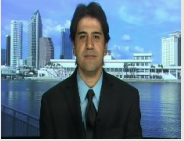
Dr. Majid Rafizadeh, an American scholar and political scientist, is the president of the International American Council on the Middle East. Harvard-educated, Rafizadeh serves on the advisory board of Harvard International Review. He is originally from Iran and Syria. You can contact him at Dr.rafizadeh@post.harvard.edu or follow him at @majidrafizadeh
This post first appeared on Al Arabiya.
-- This feed and its contents are the property of The Huffington Post, and use is subject to our terms. It may be used for personal consumption, but may not be distributed on a website.
9 Phrases Smart People Never Use In Conversation

We've all said things that people interpreted much differently than we thought they would. These seemingly benign comments lead to the awful feeling that only comes when you've planted your foot firmly into your mouth.
Verbal slip-ups often occur because we say things without knowledge of the subtle implications they carry. Understanding these implications requires social awareness--the ability to pick up on the emotions and experiences of other people.
TalentSmart has tested the emotional intelligence (EQ) of more than a million people and discovered that social awareness is a skill in which many of us are lacking.
We lack social awareness because we're so focused on what we're going to say next--and how what other people are saying affects us--that we completely lose sight of other people.
This is a problem because people are complicated. You can't hope to understand someone until you focus all of your attention in his or her direction.
The beauty of social awareness is that a few simple adjustments to what you say can vastly improve your relationships with other people.
To that end, there are some phrases that emotionally intelligent people are careful to avoid in casual conversation. The following phrases are nine of the worst offenders. You should avoid them at all costs.
1. "You look tired."
Tired people are incredibly unappealing--they have droopy eyes and messy hair, they have trouble concentrating, and they're as grouchy as they come. Telling someone he looks tired implies all of the above and then some.
Instead say: "Is everything okay?" Most people ask if someone is tired because they're intending to be helpful (they want to know if the other person is okay). Instead of assuming someone's disposition, just ask. This way, he can open up and share. More importantly, he will see you as concerned instead of rude.
2. "Wow, you've lost a ton of weight!"
Once again, a well-meaning comment--in this case a compliment--creates the impression that you're being critical. Telling someone that she has lost a lot of weight suggests that she used to look fat or unattractive.
Instead say: "You look fantastic." This one is an easy fix. Instead of comparing how she looks now to how she used to look, just compliment her for looking great. It takes the past right out of the picture.
3. "You were too good for her anyway."
When someone severs ties with a relationship of any type, personal or professional, this comment implies he has bad taste and made a poor choice in the first place.
Instead say: "Her loss!" This provides the same enthusiastic support and optimism without any implied criticism.
4. "You always..." or "You never..."
No one always or never does anything. People don't see themselves as one-dimensional, so you shouldn't attempt to define them as such. These phrases make people defensive and closed off to your message, which is a really bad thing because you likely use these phrases when you have something important to discuss.
Instead say: Simply point out what the other person did that's a problem for you. Stick to the facts. If the frequency of the behavior is an issue, you can always say, "It seems like you do this often." or "You do this often enough for me to notice."
5. "You look great for your age."
Using "for your" as a qualifier always comes across as condescending and rude. No one wants to be smart for an athlete or in good shape relative to other people who are also knocking on death's door. People simply want to be smart and fit.
Instead say: "You look great." This one is another easy fix. Genuine compliments don't need qualifiers.
6. "As I said before..."
We all forget things from time to time. This phrase makes it sound as if you're insulted at having to repeat yourself, which is hard on the recipient (someone who is genuinely interested in hearing your perspective). Getting insulted over having to repeat yourself suggests that either you're insecure or you think you're better than everyone else (or both!). Few people who use this phrase actually feel this way.
Instead say: When you say it again, see what you can do to convey the message in a clearer and more interesting manner. This way they'll remember what you said.
7. "Good luck."
This is a subtle one. It certainly isn't the end of the world if you wish someone good luck, but you can do better because this phrase implies that they need luck to succeed.
Instead say: "I know you have what it takes." This is better than wishing her luck because suggesting that she has the skills needed to succeed provides a huge boost of confidence. You'll stand out from everyone else who simply wishes her luck.
8. "It's up to you." or "Whatever you want."
While you may be indifferent to the question, your opinion is important to the person asking (or else he wouldn't have asked you in the first place).
Instead say: "I don't have a strong opinion either way, but a couple things to consider are..." When you offer an opinion (even without choosing a side), it shows that you care about the person asking.
9. "Well at least I've never ___."
This phrase is an aggressive way to shift attention away from your mistake by pointing out an old, likely irrelevant mistake the other person made (and one you should have forgiven her for by now).
Instead say: "I'm sorry." Owning up to your mistake is the best way to bring the discussion to a more rational, calm place so that you can work things out. Admitting guilt is an amazing way to prevent escalation.
Bringing It All Together
In everyday conversation, it's the little things that make all the difference. Try these suggestions out, and you'll be amazed at the positive response you get.
What other phrases should people avoid? Please share your thoughts in the comments section below as I learn just as much from you as you do from me.
-- This feed and its contents are the property of The Huffington Post, and use is subject to our terms. It may be used for personal consumption, but may not be distributed on a website.


Subscribe to:
Comments (Atom)
