 Police in Janesville, Wis., announced Thursday that they have determined that a 15-year-old girl who claimed she was groped before being pepper-sprayed outside a Donald Trump rally earlier this week was not sexually assaulted. Viral video of the young anti-Trump protester being pepper-sprayed moments after she appeared to punch a 59-year-old man, David Crandall, in the face received national attention.
Thursday, March 31, 2016
Police: Pepper-sprayed girl at Trump rally was not sexually assaulted
Police in Janesville, Wis., announced Thursday that they have determined that a 15-year-old girl who claimed she was groped before being pepper-sprayed outside a Donald Trump rally earlier this week was not sexually assaulted. Viral video of the young anti-Trump protester being pepper-sprayed moments after she appeared to punch a 59-year-old man, David Crandall, in the face received national attention.

Police: Pepper-sprayed girl at Trump rally was not sexually assaulted
Police in Janesville, Wis., announced Thursday that they have determined that a 15-year-old girl who claimed she was groped before being pepper-sprayed outside a Donald Trump rally earlier this week was not sexually assaulted. Viral video of the young anti-Trump protester being pepper-sprayed moments after she appeared to punch a 59-year-old man, David Crandall, in the face received national attention.
Wednesday, March 30, 2016

Tuesday, March 29, 2016
Trump campaign manager lawyers up over charge he grabbed reporter

Donald Trump's campaign director Tuesday hired one of the country's top defense lawyers after he was charged with battery connected to a confrontation with a reporter in Florida three weeks ago.
Trump campaign manager lawyers up over charge he grabbed reporter
Donald Trump's campaign director Tuesday hired one of the country's top defense lawyers after he was charged with battery connected to a confrontation with a reporter in Florida three weeks ago.
Monday, March 28, 2016
US company to sell smartphone-shaped gun
 Americans will soon be able to buy a smartphone-shaped gun that can hold two bullets and easily slip into a pocket.
US company to sell smartphone-shaped gun
Americans will soon be able to buy a smartphone-shaped gun that can hold two bullets and easily slip into a pocket.
Sunday, March 27, 2016
Who Will Become a Terrorist? Research Yields Few Clues
 The question of what turns people toward violence — and whether they can be steered away from it — has bedeviled governments around the world for generations.
Saturday, March 26, 2016
Tensions Mount Between India and Pakistan over Balochistan
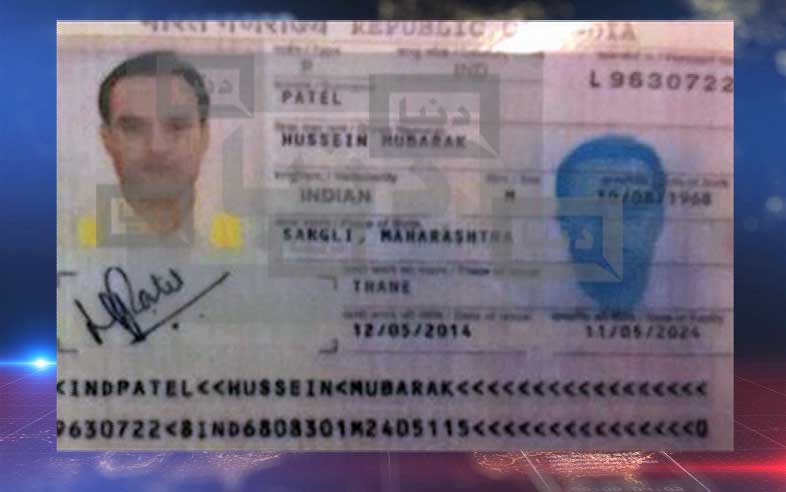
Photo Source: Dunya News, Pakistan
On March 24th, the Pakistani security officials, backed by the civilian authorities, said they had arrested an Indian national somewhere in Balochistan and now they describe it as the 'evidence' of Indian involvement in the restive province. The Indian Ministry of External Affairs has also confirmed that Mr. Kulbhushan Jadhav, a former Navy officer, has been arrested. While Islamabad says Mr. Jadhav worked for the Indian intelligence agency, the Research and Analysis Wing (RAW), on a high position, New Delhi has denied his affiliation with its premier intelligence agency.
The circumstances surrounding the arrest of the Indian national are still elusive. Nobody knows how and where he was arrested and who arrested him. Likewise, the Pakistanis have leveled all kinds of allegations on him soon after the news about his arrest broke out. They say he was involved in providing training and weapons to the Baloch insurgents and engaged in promoting unrest in Karachi. One wonders how much time it took the Pakistani officials to extract so much information from Mr. Jadhav when they are saying that he has been moved to Islamabad for further investigation. Regardless the authenticity of the Pakistani charges, the arrest of Mr. Jadhav will significantly help Islamabad in embarrassing India and discrediting the Baloch nationalists for what they bill as a homegrown liberation movement.
For the past several years, Pakistan has been accusing India of interfering in Balochistan but it never brought in public any evidence to substantiate its claims. The alleged Indian involvement in Balochistan has become an integral part of the talking points the Pakistani officials use whenever they meet with the Indian officials. The meeting between former prime ministers Manmohan Singh and his Pakistani counterpart Yousuf Raza Gilani at Sharm-el-Sheikh in Egypt in 2009 was the first occasion when Balochistan was mentioned at a high level. Afterward, the Pakistani officials also provided dossiers to the United Nations --- which were not made public --- in October 2015 to prove the Indian hand in fomenting trouble inside Pakistan. The Indians, on the other hand, say they have no interest in destabilizing Pakistan.
No matter what the Pakistani and the Indian authorities say, this episode will somewhat benefit the Baloch nationalists who have been marching in world capitals and meeting with leaders and activists desperately seeking international support for their liberation movement. The Baloch leaders have expressed anguish and frustration over the lack of support from the international community amid the slow motion genocide of the Baloch people by the Pakistani security forces. All the Baloch leaders and activists need at this point is more and more international attention. Unlike their vocal support for the Bengalis in 1971, the Indian politicians and the media have not demonstrated any serious interest in the Baloch matter. The episode embroiling Mr. Jadhav would at least help the Indian authorities to have a serious briefing about the conflict in Balochistan and what is actually going on. Likewise, the row between India and Pakistan in the backdrop of this episode is unlikely to escape the attention of the United Nations, the European Union, the American and the British diplomatic corps in Islamabad and New Delhi. The more noise is made on Balochistan, the better it is for the Baloch because beneath this incident lies a mountain of human rights abuses, repression and exploitation of the Baloch people committed by the Pakistani authorities.
This incident will also richly benefit the Pakistani security establishment in justifying its tight grip over the province. Similar to the 2011 Raymond Davis episode when an American citizen and a contractor for the Central Intelligence Agency (CIA) was arrested in Lahore for killing two Pakistani nationals, this event will also tremendously feed the conspiracy theorists in the Pakistani military and the media. Even if Mr. Jadhav had no connections with the Indian government, his arrest from Balochistan (if that actually happened) is still an extraordinary development because the Pakistani authorities do not normally allow foreign nationals to travel to Balochistan. The alternative routes are the borders with Iran and Afghanistan. According to the initial reports, the Indian national sneaked into Balochistan via Iran.
This incident coincided with the first visit to Islamabad of Iran's Hassan Rouhani since becoming the President. Iran has suddenly become an active player in the region after the lifting of the sanctions because of the successful deal with the P5+1 nations. Tensions between Tehran and Riyadh have also skyrocketed in the recent months because of differences on Syria and Yemen. The Pakistani officials have reportedly mentioned Mr. Jadhav's case with the visiting Iranian leader and sought Iran's cooperation on border security. (The Iranian leader denied discussing the matter with the Pakistanis). The Iranians, on their part, have even a worse record than the Pakistanis when it comes to treating the Baloch people. For instance, last month Shahindokht Molaverdi, Iran's vice president for women and family affairs, conceded that "we have a village in Sistan and Baluchestan (province) where every single man has been executed."
When Pakistan and Iran treat their Baloch population as third class citizens, it seems obvious why the latter reaches out to the international community for support. They are willing to facilitate the entry and lodging of anyone who is willing to get the word from Balochistan out to the rest of the world. It is not only foreign 'spies' who are eager to know the truth about Balochistan but even foreign journalists, human rights activists and researchers want to have access to Balochistan. When the Baloch people have no objections to anyone coming from anywhere in the world to visit Balochistan, why should Islamabad have a problem? Islamabad should be more transparent and accountable about its policies and actions in Balochistan.
The row over the arrest of the alleged Indian spy now provides the Baloch nationalists an opportunity to demand an international investigation into the matter that is ideally led by the United Nations, the United States or the European Union. After all, the Baloch people should not be sandwiched in a war of words between India and Pakistan. The Baloch conflict has its own history, context and significance. It cannot afford to be overshadowed by the Pakistan-India rivalry. The Baloch leadership should come forward and assert its position on this matter because neither Islamabad nor New Delhi are entitled to speak on the behalf of the Baloch. The Baloch should speak for themselves and they should be heard because Islamabad is the aggressor, certainly not the victim, when it comes to Balochistan.
This article originally appeared in the Baloch Hal, Balochistan's first online English language newspaper founded and edited by Malik Siraj Akbar
-- This feed and its contents are the property of The Huffington Post, and use is subject to our terms. It may be used for personal consumption, but may not be distributed on a website.
Woman killed on way to mom's funeral
A woman died in a traffic accident in Utah on the way to her mother's funeral Saturday, according to CNN affiliates in the region.


These Charts Show Just How Much Puerto Rico Is Shrinking
The Obama administration has made the mass departure of people from Puerto Rico a central part of its pleas for congressional action to help the commonwealth, warning that the out-migration is worsening the island’s crippling debt crisis by depleting its tax base. Since most departing Puerto Ricans, who are U.S. citizens, move to the United States mainland and lean Democratic, the warnings carry a subtext for immigration-wary Republicans: Act now to help the island, or face the political fallout later.
A new report released on Thursday provides new insight into the acuteness of the crisis. The Pew Research Center analysis of the latest county-level census data shows just how much the faltering economy and accompanying exodus have drained the island of its people, painting a bleak picture that can only add urgency to efforts underway in Congress.
Puerto Rico’s population was 3.47 million in 2015 -- 9 percent, or 334,000 people, smaller than it was in 2000, according to Pew.
Not surprisingly, the lion’s share of the drop -- some three-quarters -- occurred from 2010 to 2015, as the island’s troubles mounted in the wake of the 2008 financial crisis.

Pew created an animated graphic comparing Puerto Rico's growth in previous decades with the recent decline and illustrating where declines have been largest. San Juan, the island's capital city, has been hit hardest, losing 10 percent of its population, or 40,000 people, since 2000.

Pew points to Puerto Rico’s prolonged economic malaise as the primary culprit for its shrinking population. Economic opportunity, according to census data cited by the study, is the main reason Puerto Ricans give for moving to the mainland U.S.
But the report also notes another byproduct of the poor economy: It has depressed the fertility rate, making it less likely that people who stay on the island will replace the people who leave.
Puerto Rico has dramatically raised taxes and cut spending in recent years to pay down a debt burden of over $70 billion, which the island’s government says it will never be able to pay in full. The effect of the austerity has been to both severely limit the ability of the island's economy to recover -- it has an 11.7 percent unemployment rate, more than twice that of the mainland U.S. -- and hollow out key social services, like health care and education.
That is one reason the White House has said that “without congressional action the situation [in Puerto Rico] could soon become a humanitarian crisis” -- even as other observers, like Democratic presidential candidate Sen. Bernie Sanders (I-Vt.), say that crisis has already arrived.
And the island could soon face new legal troubles, if, as many expect, it is unable to make bond payments to creditors due in a few weeks.
Puerto Rico needs help from Congress because as a U.S. commonwealth it occupies a gray zone that has deprived it of many of the economic liberties available to states. Chief among those is the ability to extend federal Chapter 9 bankruptcy protections to municipalities.
Puerto Rico’s government says that without the ability to restructure its debts in a judicially supervised process, it will never be able to recover economically. The commonwealth argued before the Supreme Court on Tuesday that it has the right to pass local bankruptcy laws in the absence of federal protections. If the court rules in the island’s favor, it would allow Puerto Rico to reduce the amount its municipal utilities owe, which, at $20 billion, is only a fraction of its overall debts. A decision in the case is expected by the end of June.
Regardless of how the high court rules, however, aid for the island may soon be on its way. House Republicans are hard at work on legislation that would open the door for the island to restructure debts in exchange for financial reforms overseen by a Washington-based fiscal oversight board. House Democrats have said they believe their colleagues are negotiating in good faith.
-- This feed and its contents are the property of The Huffington Post, and use is subject to our terms. It may be used for personal consumption, but may not be distributed on a website.


With Obama Visit to Cuba, Old Battle Lines Fade
 The president’s engagement policy and Raúl Castro’s minor opening to free-market ideas have created a new dynamic for Cuba that reveals what the country could become with more freedom to evolve.
Friday, March 25, 2016

Wednesday, March 23, 2016
IS trains 400 fighters to attack Europe in wave of bloodshed

The Islamic State group has trained at least 400 fighters to target Europe in deadly waves of attacks, deploying interlocking terror cells like the ones that struck Brussels and Paris with orders to choose the time, place and method for maximum chaos, officials have told The Associated Press.
Tuesday, March 22, 2016

Monday, March 21, 2016
FBI might have way to unlock attacker's iPhone without Apple

A much-anticipated court hearing on the federal government's effort to force Apple Inc. to unlock the iPhone used by one of the shooters in the San Bernardino terror attack was abruptly vacated Monday after the FBI revealed it may have a way to access data without the company's help.
Sunday, March 20, 2016
First Step in Right's Court Fight: Agreeing on a Message
 The factions opposing Merrick B. Garland’s nomination to the Supreme Court are split over whether to attack him directly or steer the debate away from his merits.
GOP Leaders Map a Strategy to Derail Trump
 If aggressive efforts to deny Mr. Trump the presidential nomination fail, the party leaders say they will try to field an independent candidate for the general election.
Saturday, March 19, 2016
Why You Should Spend Your Money on Experiences, Not Things

When you work hard every single day and there's only so much money left after your regular expenses, you have to make certain it's well spent. Spend your limited funds on what science says will make you happy.
The Paradox of Possessions
A 20-year study conducted by Dr. Thomas Gilovich, a psychology professor at Cornell University, reached a powerful and straightforward conclusion: don't spend your money on things. The trouble with things is that the happiness they provide fades quickly. There are three critical reasons for this:
- We get used to new possessions. What once seemed novel and exciting quickly becomes the norm.
- We keep raising the bar. New purchases lead to new expectations. As soon as we get used to a new possession, we look for an even better one.
- The Joneses are always lurking nearby. Possessions, by their nature, foster comparisons. We buy a new car and are thrilled with it until a friend buys a better one--and there's always someone with a better one.
"One of the enemies of happiness is adaptation," Gilovich said. "We buy things to make us happy, and we succeed. But only for a while. New things are exciting to us at first, but then we adapt to them."
The paradox of possessions is that we assume that the happiness we get from buying something will last as long as the thing itself. It seems intuitive that investing in something we can see, hear, and touch on a permanent basis delivers the best value. But it's wrong.
The Power of Experiences
Gilovich and other researchers have found that experiences--as fleeting as they may be--deliver more-lasting happiness than things. Here's why:
Experiences become a part of our identity. We are not our possessions, but we are the accumulation of everything we've seen, the things we've done, and the places we've been. Buying an Apple Watch isn't going to change who you are; taking a break from work to hike the Appalachian Trail from start to finish most certainly will.
"Our experiences are a bigger part of ourselves than our material goods," said Gilovich. "You can really like your material stuff. You can even think that part of your identity is connected to those things, but nonetheless they remain separate from you. In contrast, your experiences really are part of you. We are the sum total of our experiences."
Comparisons matter little. We don't compare experiences in the same way that we compare things. When people are asked if they'd rather have a high salary that was lower than that of their peers or a low salary that was higher than that of their peers, a lot of them aren't sure. But when they are asked the same question about the length of a vacation, most people choose a longer vacation, even though it is shorter than that of their peers. It's hard to quantify the relative value of any two experiences, which makes them that much more enjoyable.
Anticipation matters. Gilovich also found that anticipation of an experience causes excitement and enjoyment, while anticipation of obtaining a possession causes impatience. Experiences are enjoyable from the very first moments of planning, all the way through to the memories you cherish forever.
Experiences are fleeting (which is a good thing). Have you ever bought something that wasn't nearly as cool as you thought it would be? Once you buy it, it's right there in your face, reminding you of your disappointment. And even if a purchase does meet your expectations, buyer's remorse can set in: "Sure, it's cool, but it probably wasn't worth the money." We don't do that with experiences. The very fact that they last for only a short time is part of what makes us value them so much, and that value tends to increase as time passes.
Bringing It All Together
The temporary happiness achieved by buying things only provides "puddles of pleasure." In other words, that kind of happiness evaporates quickly and leaves us wanting more. Things may last longer than experiences, but the memories that linger are what matter most.
What makes you happier, experiences or things? Please share your thoughts in the comments section below as I learn just as much from you as you do from me.
-- This feed and its contents are the property of The Huffington Post, and use is subject to our terms. It may be used for personal consumption, but may not be distributed on a website.


Spring equinox is upon us
Spring officially starts on Sunday, but you may want to wait to pack up those winter coats.


Subscribe to:
Comments (Atom)
